
Is 10,000 Steps a Day Really the Magic Number for Weight Loss?

TRACK STEPS.
Fitbit Charge 6GPS & Heart Rate
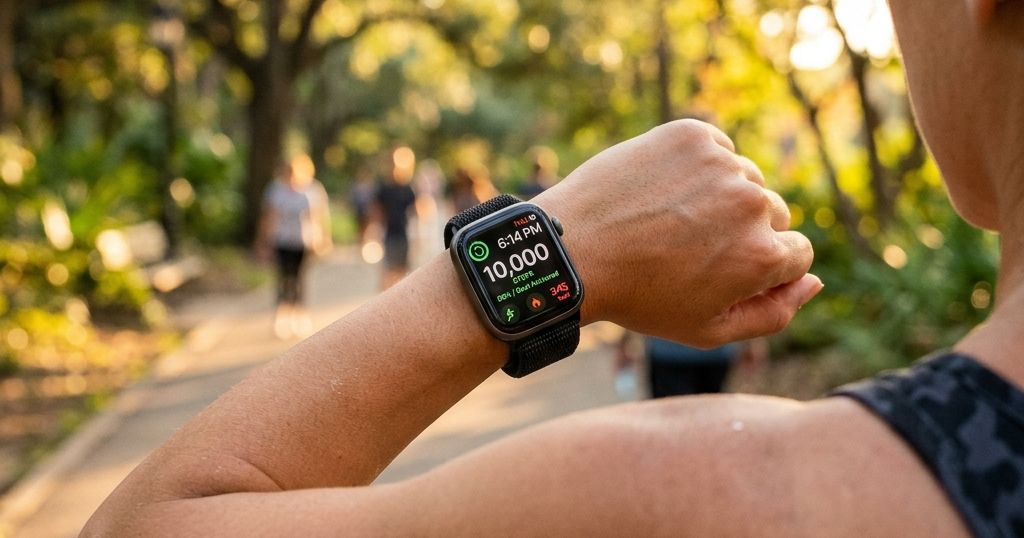
For decades, 10,000 steps a day has been the undisputed golden rule of fitness tracking. Whether you wear an Apple Watch, a Fitbit, or a simple pedometer, that five-digit number is baked into our collective consciousness as the ultimate daily health target.
But is it really the magic number you need to hit to lose weight? The truth is that while 10,000 is an excellent target for cardiovascular health and longevity, weight loss is a far more nuanced equation. If your goal is to shed stubborn fat, blindly chasing 10,000 steps without understanding the underlying mechanics of energy expenditure might leave you frustrated.
The Surprising Origin of the 10,000-Step Rule
You might assume that 10,000 steps was a metric established by a panel of cardiologists after years of rigorous clinical trials. Interestingly, it didn't start with science at all—it started with marketing.
In the lead-up to the 1964 Tokyo Olympics, a Japanese company invented one of the first wearable pedometers. They named it 'Manpo-kei', which translates directly to '10,000 steps meter'. The number wasn't chosen for its metabolic supremacy; it was chosen because the Japanese character for 10,000 (万) looks somewhat like a person walking. The marketing campaign was a massive success, and the arbitrary number became a global standard.
However, modern science has since played catch-up. Decades of subsequent research have largely validated the idea that taking between 8,000 and 12,000 steps daily leads to significantly better health outcomes, lower all-cause mortality, and improved insulin sensitivity.
Do You Actually Need 10,000 Steps to Lose Weight?
The short answer is no, but it certainly provides a massive advantage. Weight loss ultimately boils down to creating a sustained calorie deficit. If you are consuming fewer calories than your body requires to maintain its current mass, you will lose weight—whether you walk 4,000 steps or 14,000 steps.
That being said, human bodies are incredibly adaptive. Relying entirely on dietary restriction (eating less) to force a calorie deficit often leads to metabolic slowdown and intense hunger. This is where stepping comes in. Walking increases your Total Daily Energy Expenditure (TDEE) through a mechanism called NEAT.
The Power of NEAT (Non-Exercise Activity Thermogenesis)
NEAT refers to all the calories you burn doing everything that isn't sleeping, eating, or dedicated sports-like exercise. Walking to your car, pacing while on a phone call, and taking the stairs all contribute to NEAT. For many people, NEAT accounts for a larger portion of daily calorie burn than actual workouts.
Hitting 10,000 steps a day effectively weaponizes your NEAT. Depending on your body weight and walking pace, hitting that five-digit milestone can burn between 300 to 500 extra calories a day. Over the course of a week, that equates to 2,100 to 3,500 calories—which is roughly the equivalent of burning off a full pound of body fat.
Why Pace and Intensity Matter More Than Volume
Not all steps are created equal. A slow, meandering 10,000 steps through a grocery store will not yield the same metabolic benefits as a brisk, purposeful 8,000-step walk through a hilly neighborhood.
When you increase your walking pace, your heart rate elevates into the 'fat-burning zone' (typically 60-70% of your maximum heart rate). At this intensity, your body becomes highly efficient at oxidizing stored body fat for fuel. If you are struggling to find the time to hit 10,000 steps, focus on intensity over volume. A brisk 6,000 steps can often outperform a sluggish 10,000.
Strategic Ways to Scale Your Daily Steps
If you are currently sedentary (logging less than 3,000 steps a day), jumping straight to 10,000 steps is a recipe for burnout, shin splints, and plantar fasciitis. Instead, follow a progressive scaling strategy:
- The +2,000 Rule: Find your current baseline average over a 3-day period. Aim to add exactly 2,000 steps to that number for one full week. (2,000 steps is roughly one mile of walking, or about 20 minutes of intentional movement).
- Habit Stacking: Tie your walking to an existing daily habit. Commit to a 10-minute walk immediately after every meal. Not only does this add 3,000+ steps to your day, but post-meal walking has been clinically proven to blunt blood sugar spikes.
- The Commute Swap: If you take public transit, get off one stop early. If you drive, park at the absolute furthest edge of the parking lot.
Personalizing Your Weight Loss Target
Rather than obsessing over an arbitrary number from a 1960s marketing campaign, the most effective approach to weight loss is personalization. Your height, current weight, age, and deadline all dictate exactly how many calories—and by extension, how many steps—you actually need to reach your goal.
To remove the guesswork from your routine, use our Step-Up Weight Loss Calculator. By inputting your specific metrics, the calculator will reverse-engineer your target date and provide you with a precise, personalized daily step goal and calorie target to ensure you hit your milestones safely and effectively.
Ultimately, consistency will always beat intensity. Whether your magic number is 6,000, 10,000, or 15,000—the best step count is the one you can sustain day after day, week after week.