
Steps to Calories Calculator: Convert Steps Into Calories Burned
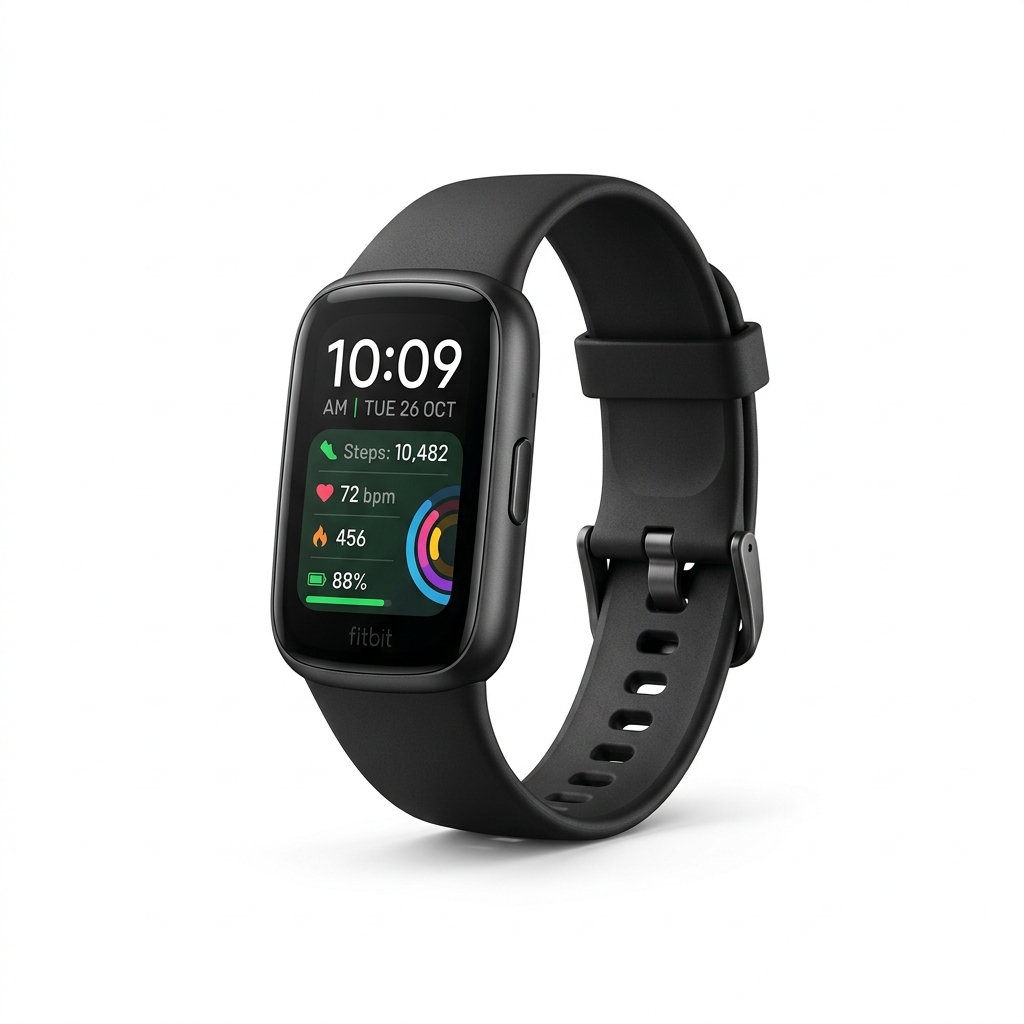
TRACK STEPS.
Fitbit Charge 6GPS & Heart Rate

Walking is one of the simplest and most sustainable ways to burn calories. But how many calories you burn from steps depends on your body weight, pace, terrain, and total distance.
Instead of guessing, you can use a steps to calories calculator to estimate your burn based on your specific inputs. Below, you will learn how step-based calorie burn works, what affects it, and how many steps you may need to hit common calorie targets.
Use the calculator to get your personalized result, then read the guide to understand how the numbers are determined.
How Many Steps Burn 100, 500, or 1000 Calories?
Here are rough estimates for moderate walking on flat ground.
Table: Calories Burned
100 calories: ~2,000 steps (150 lbs) / ~1,600 steps (200 lbs)
500 calories: ~10,000 steps (150 lbs) / ~8,000 steps (200 lbs)
1000 calories: ~20,000 steps (150 lbs) / ~16,000 steps (200 lbs)
These numbers are averages. Your actual burn can vary based on speed, incline, and stride length.
For precise results, use the calculator rather than relying on generic charts.
How Calories Burn From Walking Actually Work
Calorie burn during walking is based on energy expenditure. The body uses energy to move mass across distance.
Four main variables determine calorie output:
- Body weight
- Walking speed
- Terrain or incline
- Duration
Heavier individuals burn more calories per step because moving greater mass requires more energy. Faster walking increases heart rate and metabolic demand. Incline significantly increases intensity.
That is why two people walking 10,000 steps will not burn the same number of calories.
What Affects Calories Burned Per Step?
Body Weight
The biggest factor. A 200 lb individual burns substantially more calories per step than a 130 lb individual.
Walking Speed
Slow stroll: lower calorie burn. Brisk pace: higher calorie burn. Power walking: significantly higher calorie burn.
Speed changes your metabolic equivalent level.
Terrain and Incline
Flat ground is the baseline. Incline walking increases glute and hamstring engagement and raises calorie burn quickly.
Even small incline adjustments on a treadmill increase output.
Stride Length
Not all steps are equal. Taller individuals often cover more distance per step, which influences total calorie burn.
The Basic Steps to Calories Formula
Most calculators use a variation of the MET formula:
Calories burned = MET × body weight in kilograms × time in hours
MET values vary based on walking intensity.
Instead of manually calculating time and conversion factors, a steps-based calculator estimates distance from steps, then calculates calorie burn using standard metabolic values.
That is why a calculator produces more accurate results than a static chart.
How Many Steps Per Day for Weight Loss?
One pound of fat roughly equals 3,500 calories.
If you aim to lose one pound per week, you need about a 500 calorie daily deficit through diet, activity, or both.
For many people, that translates to 8,000 to 12,000 daily steps combined with moderate calorie control.
10,000 steps per day is a common benchmark, but it is not mandatory. Some individuals lose weight at 7,000 steps. Others may need 12,000 or more depending on intake and body size.
Consistency matters more than hitting a single arbitrary number.
How Many Steps to Burn Specific Calorie Targets?
Here are general ranges for moderate walking.
100 Calories
Usually between 1,500 and 2,500 steps depending on weight.
300 Calories
Approximately 5,000 to 7,000 steps.
500 Calories
Commonly 8,000 to 12,000 steps.
750 Calories
Often 12,000 to 16,000 steps.
1000 Calories
May require 16,000 to 22,000 steps depending on weight and pace.
These are estimates. Individual metabolic efficiency varies.
If your goal is a specific calorie target, calculate using your body weight rather than relying on averages.
Calories Burned by Body Weight
Below is a rough example for 10,000 steps at moderate pace on flat terrain.
Table: Estimated Calories Burned
120 lbs: 250 to 300 calories
150 lbs: 300 to 400 calories
180 lbs: 400 to 500 calories
200 lbs: 450 to 550 calories
250 lbs: 550 to 650 calories
Again, incline and pace increase these numbers.
Steps vs Distance vs Time
Steps measure movement frequency. Distance measures total ground covered. Time measures duration of effort.
Two people can walk 10,000 steps: one in 90 minutes at slow pace and one in 70 minutes at brisk pace.
The second person will burn more calories because intensity is higher.
Distance and time sometimes provide more precision than step count alone. However, steps are practical because most people track them easily with wearables.
Use the Steps to Calories Calculator for Accurate Results
Charts provide estimates. Your body is not an average.
If you want precise calorie burn based on your weight, pace, and daily step count, use the calculator rather than guessing.
Walking is simple. Precision makes it effective.
Start calculating your calorie burn now and build a consistent plan around real numbers.